
My Fibre Collection for My Dye Journey
We need to start with wherever we are. What do we have at hand? What do we like to work with? What can we afford? What would be a special purchase or gift to ourselves and our artist?
I have the luxury of having worn many hats as an artist - currently, I am a weaver, a spinner, and an ecoprinter. Each of these hats has brought with it materials that I can use in my natural dyeing journey.
As a weaver, I have happily collected second-hand yarns from friends, from guild auctions, and off the internet. These fibres were gathered with an eye to beauty and affordability. While I personally prefer working with natural fibres, it wasn’t a priority. And in many cases, the yarn came to me without clear labelling, so I can only guess what I’m working with.
As a spinner, I have purchased large bundles roving (def: a long and narrow bundle of fibre, usually prepared for spinning) or more specifically of tops (combed sliver). These are 100% natural fibres and are prepared for dyeing (PFD).
As an ecoprinter, I have gathered fabrics both purchase and second-hand, all of which are 100% natural. Given that I have been teaching ecoprinting for the last number of years, I have the benefit of being able to purchase in bulk, making accessible the use of silks and wool fabrics.
So from my various stashes, I have gathered together a selection of fibre that has captured my interest. And that’s the important thing!
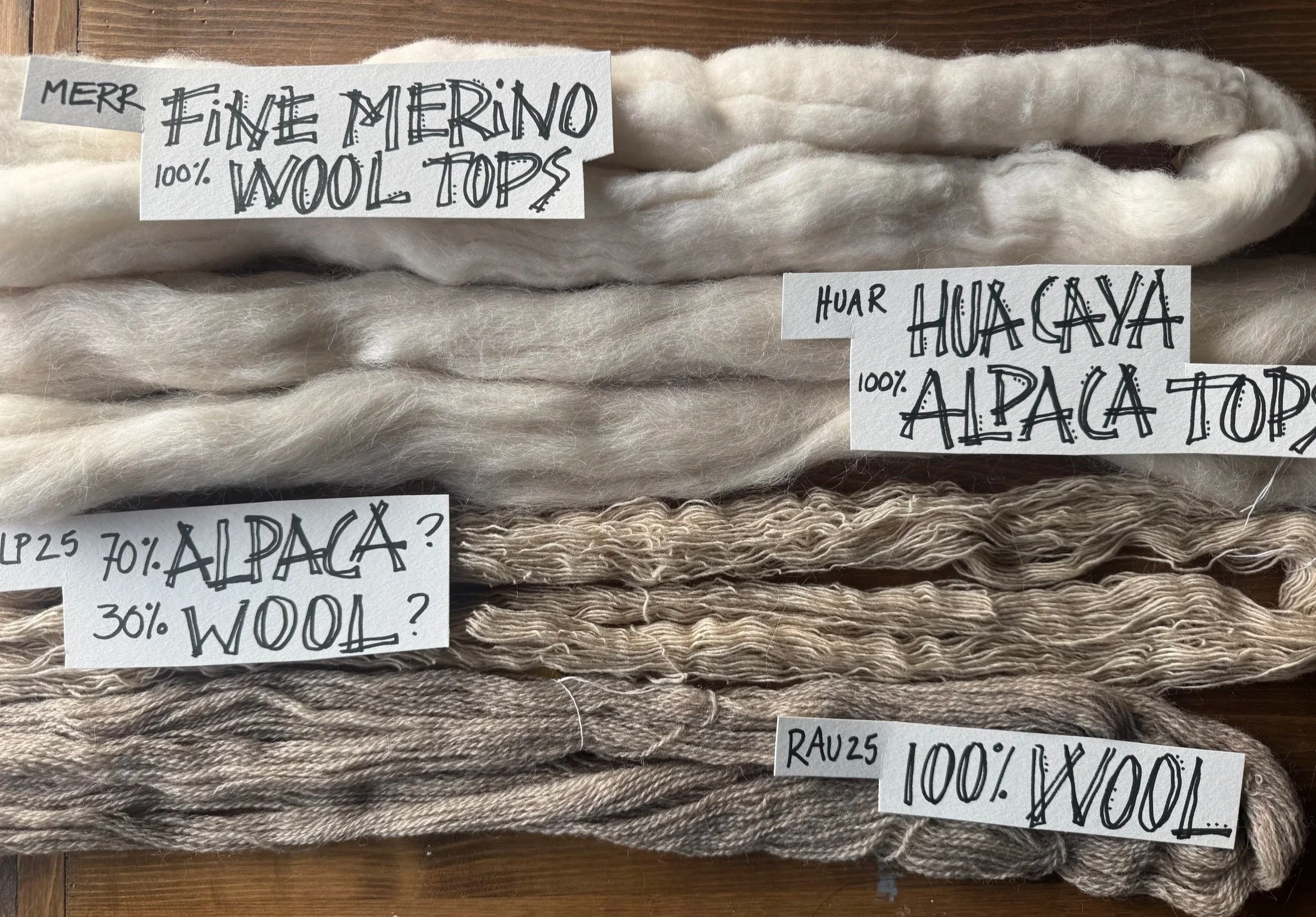
This is the original four fibres I thought I’d work with. And they are the ones that I use first in each dyebath.
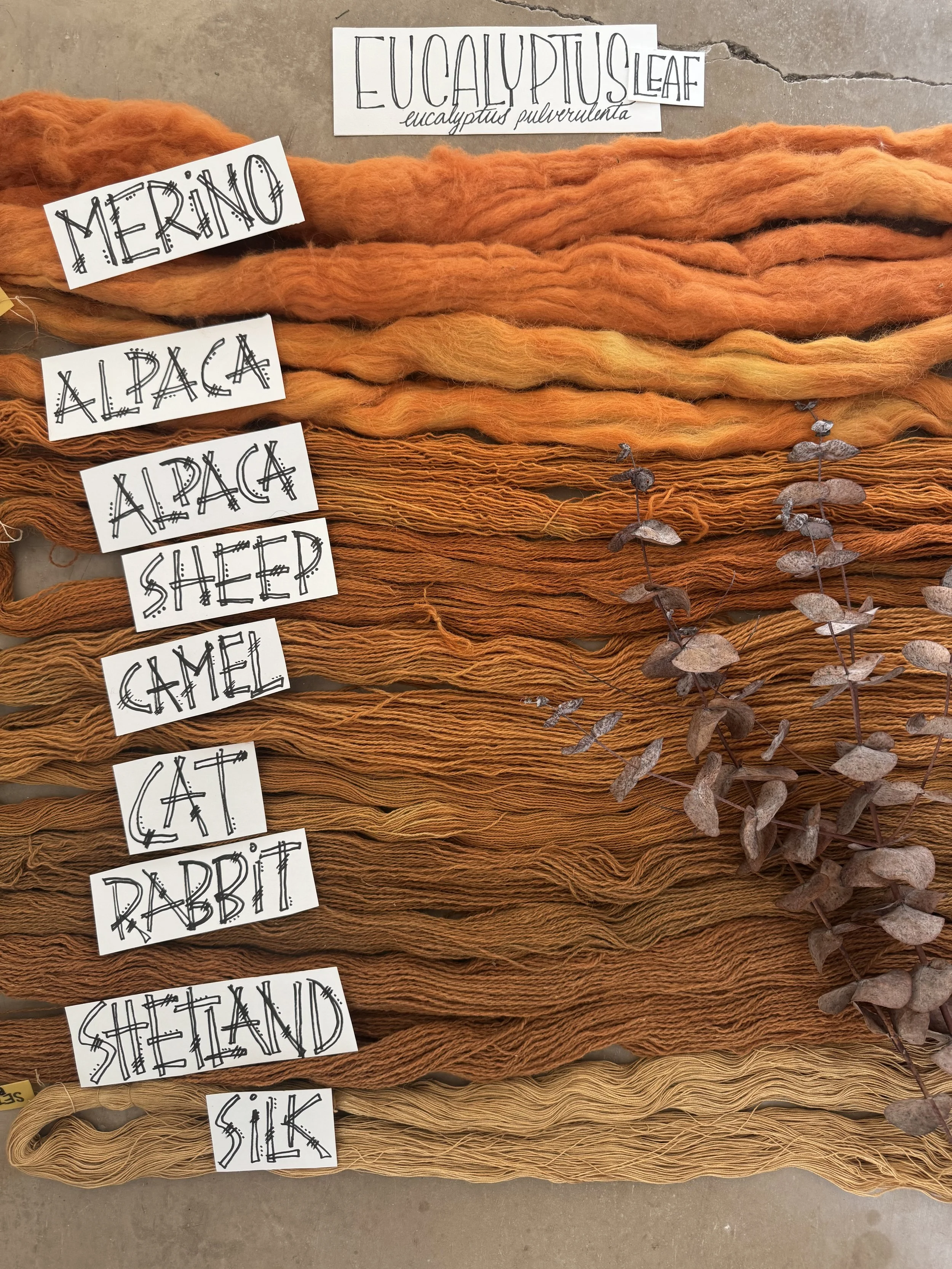
Here is the whole cast after being dyed with Eucalyptus pulverulente
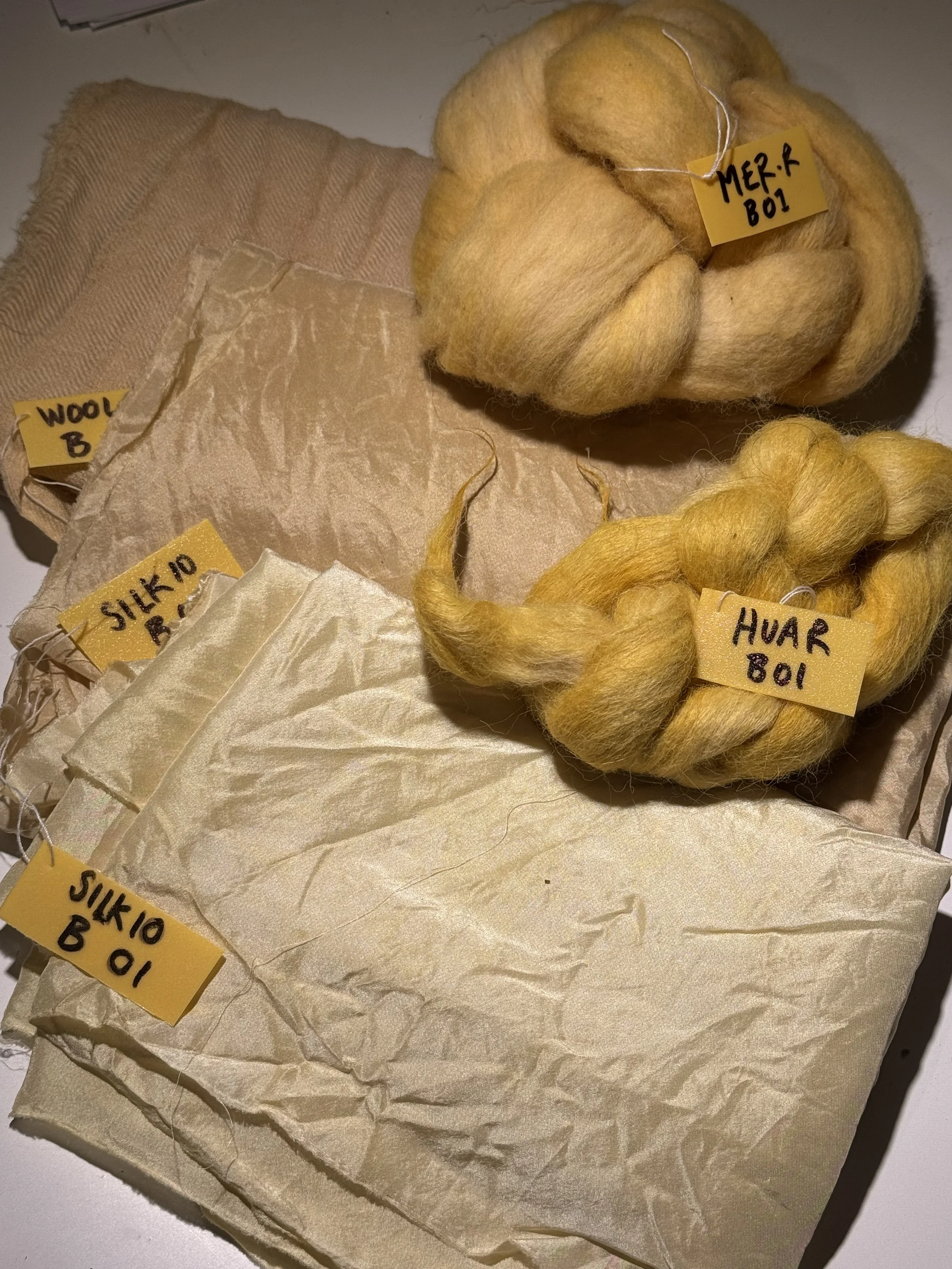
Here are some of the clothes dyed in Olive.
My Leading Four
To begin my dye journey, I chose four fibres: two roving, and two yarns.
MERR* - 100% Fine Merino Wool Tops, purchased from DHG Shop, PFD
HUAR - 100% Huacaya Alpaca Tops, purchased from DHG Shop, PFD
ALP25 - ? 70% alpaca and 30% wool
RAU25 - ??? 100% wool
* Note - These first letters and numbers are my personal logging system. (See Keeping a Fibre Log)
I chose these four as I had ample amounts of them, and they appeared to offer in interesting range of fibres.
I created a series of skeins of each. (See Preparing Yarns for Dyeing)
I put all four of them into the same mordant - 15% wof alum (See Mordanting). I did not scour; to be honest, I forgot to.
My Supporting Cast
I am in love with fibre, so I couldn’t resist the opportunity to play with other fibres from my stash. So I gathered other interesting fibres that I thought I’d like to work with. I put these into the dye baths that I liked.
While I’ve attempted to do some online sleuthing to figure out what is in each fibre, the information is not 100% accurate. So I’ve indicated this with question marks. One question mark means it is highly likely, two means I’m making an informed and educated guess, three means I am making lots of assumptions.
WOO25 - 100% wool
FIL25 - ??? 100% wool
CAM25 - ?? 100% camel - a yarn that I purchased second hand.
ANG25 - ? 70% Angora, 20% lambswool, 10% nylon
SHE25 - ? 80% Shetland, 20% polyamide
Some skeins were simply mordanted with 15% wof alum, no scouring
Some skeins were mordanted with 15% wof alum, scoured (See How to Scour) and mordanted again with 15% alum.
The Second Act
And to be thorough, I chose to dye some cloth as well.
SILK10 - 100% silk, 10mm habotai, purchased through Aliababa from Shaoxing Ika Textile Trading Co., Ltd., PFD, mordanted with 15% alum
WOOLG - 100% wool gauze twill, purchased from Dharma Trading Company, PFD, mordanted with 15% alum
LINF - ?? 100% linen, purchased from a second-hand store in rural France, mordanted with homemade soy milk