
How To Dye with Olive Leaf
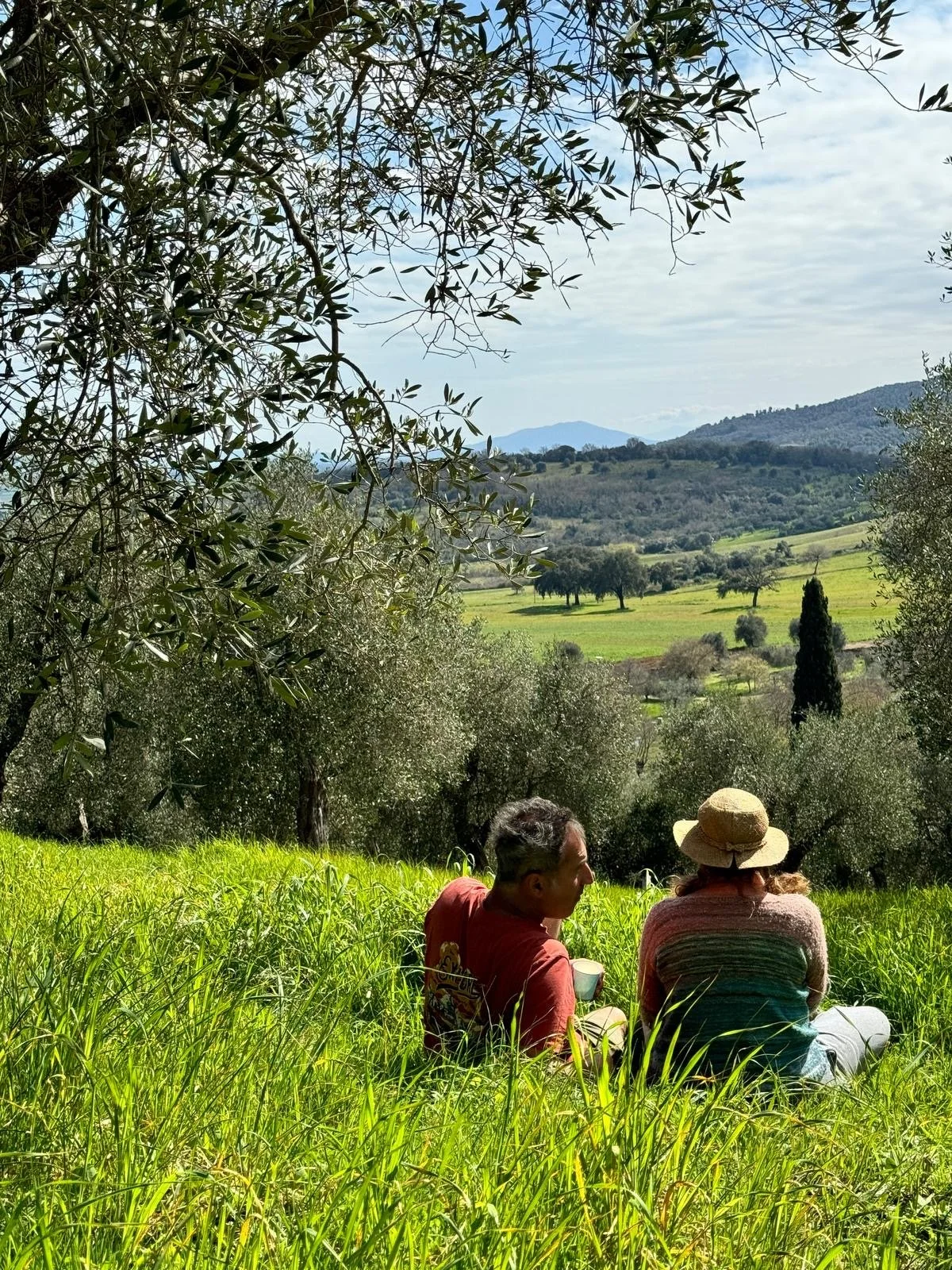
Andrea and I sitting in our olive grove
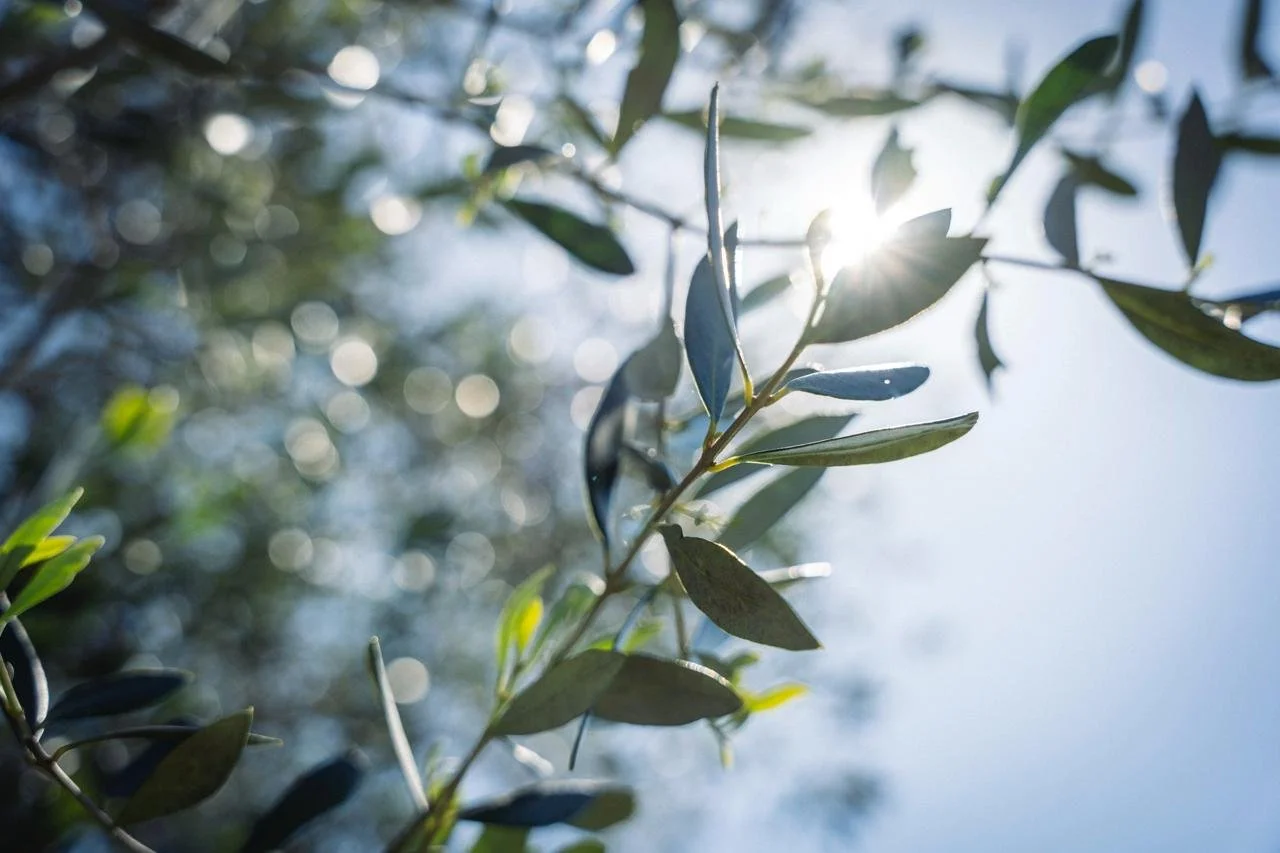
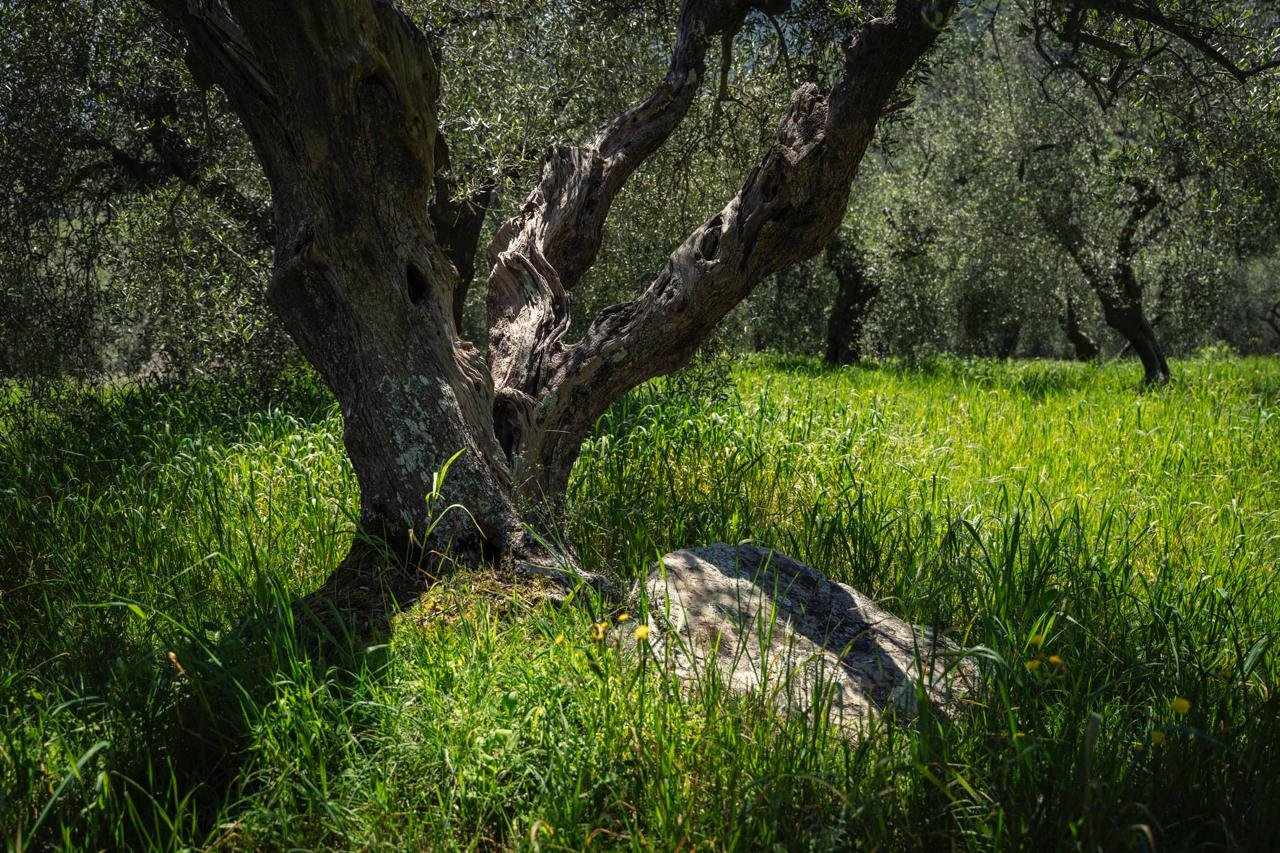
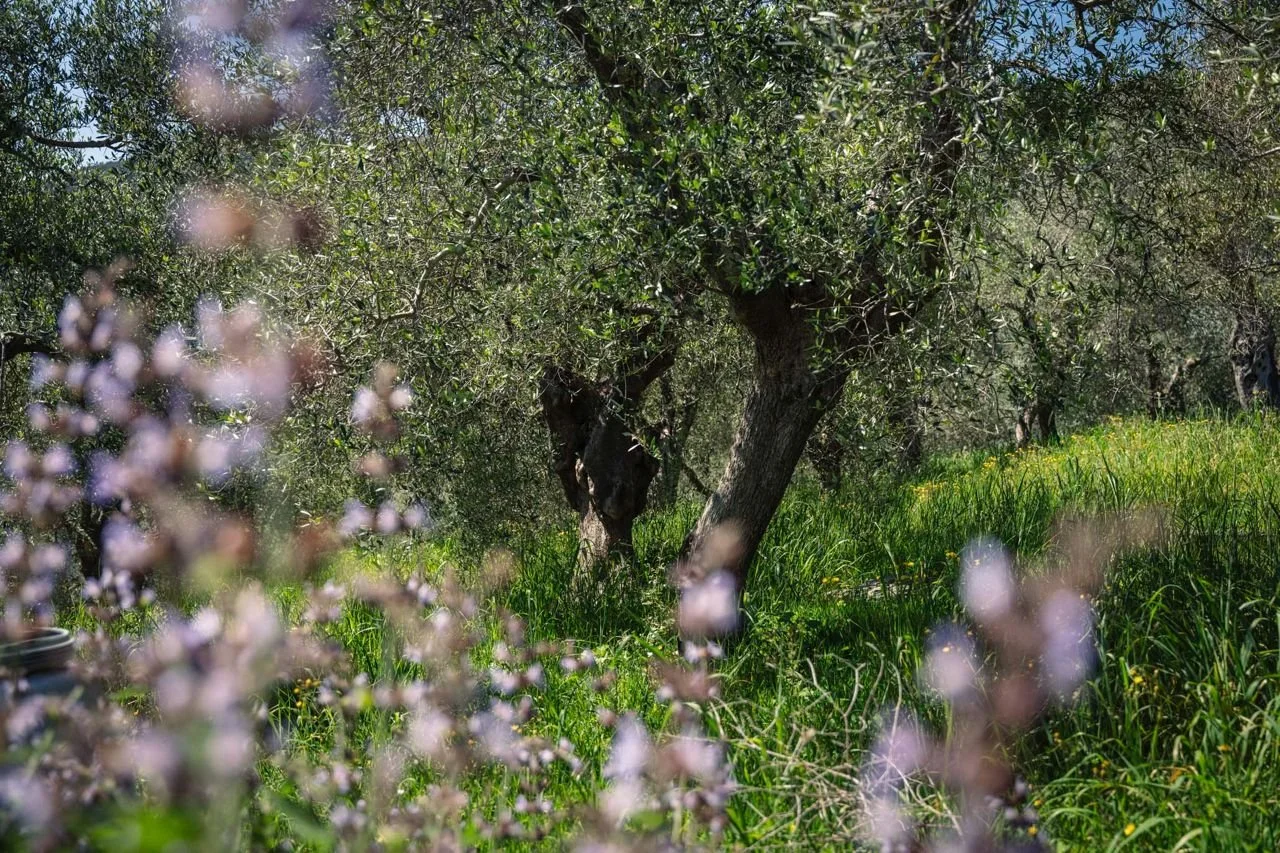
I started my dye journey with olive, as we have 1200 olive trees spread over 2 groves, one old and one new. Each year, the olive trees need to be pruned to encourage fruiting and easy access of sunlight and air to the growing olives. So each year we have an abundance of olive cuttings. What better place to start!
I asked Johanna, who cares for our old grove, if the next time she pruned she would bring me some. Johanna is old school - she has names for each of the trees and has the kind of reciprocal relationship with them that I am hoping to engender in my dye journey. Johanna tends to these trees to bring out their very best and they respond by offering her a deliciously spicy oil, rich in health-giving properties.
A week or so later, Johanna called - she had a trunk full of prunings perfect for my first dye pot.
Botanical Overview
The olive tree, Olea europaea, is a small evergreen tree best known for its fruit and oil, and for thriving in warm, dry regions around the Mediterranean. You’ll see it everywhere here. Every house in the countryside has its own grove. Italy alone has 538 cultivars. Most of the olive trees grown in our grove (and in Tuscany in general) are Frantoio, Leccino, Pendolio, Maurino, Moraiolo and Taggiasca.
A typical olive tree grows to a few meters tall, with a short, twisting trunk and a rounded, branching crown. It is well adapted to hot, dry summers and poor, rocky soils. It is one of the oldest fruit trees domesticated by humans, and can live for thousands of years. Because of this longevity and toughness, it is often associated with resilience, peace, and continuity.
The olive tree’s leaves are narrow and firm, growing in pairs directly across from one another. dark green on top and silvery underneath, giving the whole tree a soft, grey‑green look. The bark becomes rough and deeply lined as the tree ages, adding to its characteristic, ancient appearance. In our grove, many of the trees are ‘newer’ cultivars that have been grafted onto 400 year old trunks.
Olive trees produce clusters of small, white flowers that later develop into olives, which start out green and darken as they ripen. As the olives ripen they produce progressively more oil, but with fewer anti oxidants and less flavour. So there is an art to knowing when to harvest to get the type of oil desired.
So far, my dye journey has not revealed a similar art to gathering olive leaves for the dye pot! Whew!
How to Cultivate it
In warm climates, olives want full sun and well-drained soil. Plant near a warm wall, and water deeply, but allow soil to dry between waterings.
In cold climates, olives can grow in pots. In summer, put it outside with lots of sunlight. In winter, keep just above freezing (they need cold to induce flowering).
For Dyeing
Why this plant: In the right climate, olive trees are relatively easy to grow, they like to be pruned (so gathering a significant number of leaves at one time is possible), and they produce a bright colour.
Which species to use: Any species of Olea europaea can be used for dyeing.
Which parts to use: The leaves. The branches and bark will tip the colour towards tans and browns.
How to harvest and store: As olives are evergreens, the leaves can be gathered at any time. I like to gather the leaves from the branches that have been recently pruned - which happens most often in Tuscany in late winter to early spring, typically between February and April. The leaves can be used immediately or kept in paper bags until needed for the dyepot.
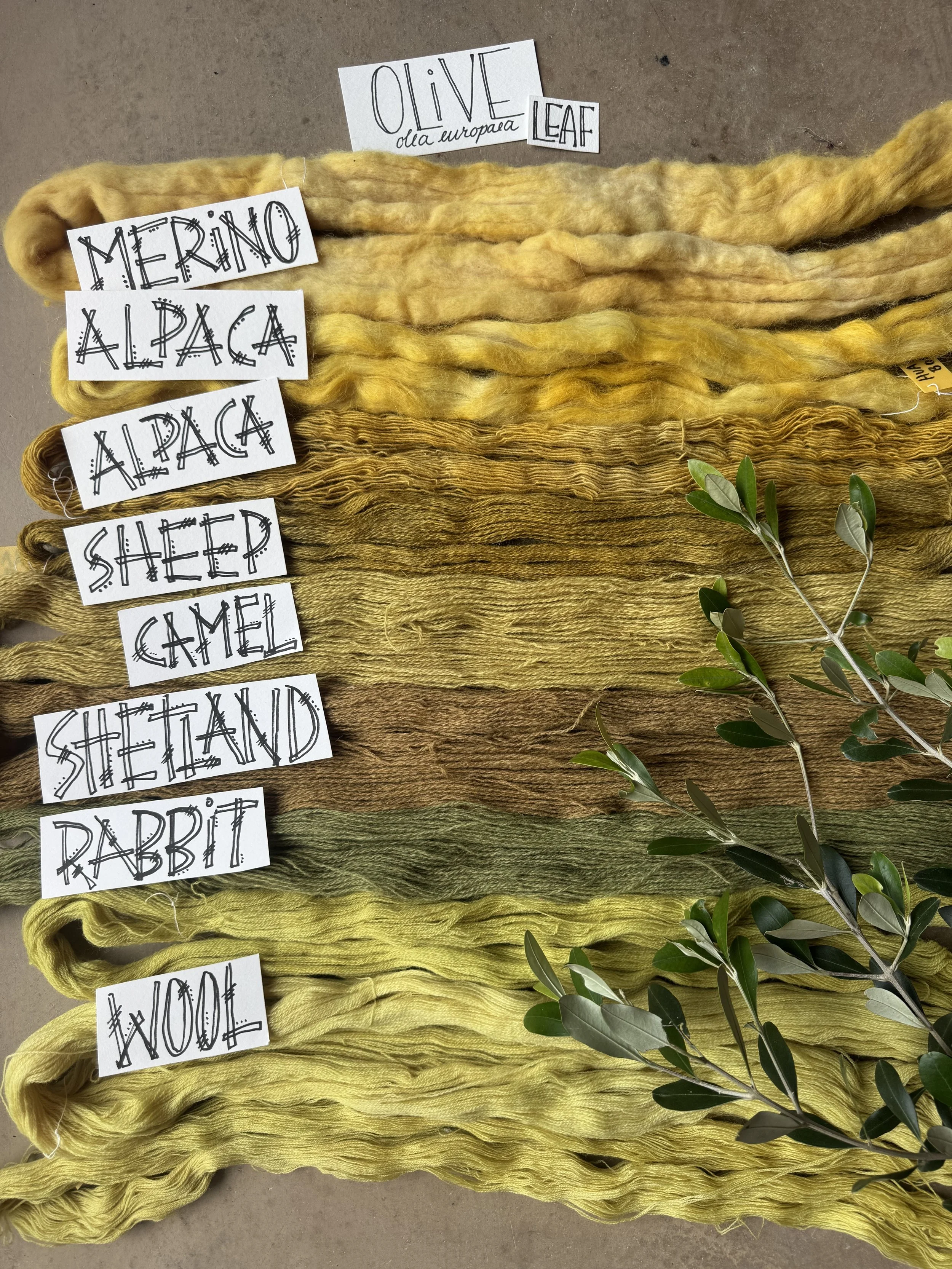
Typical colour results: It produces a bright clear yellow.
How to Dye with Olive
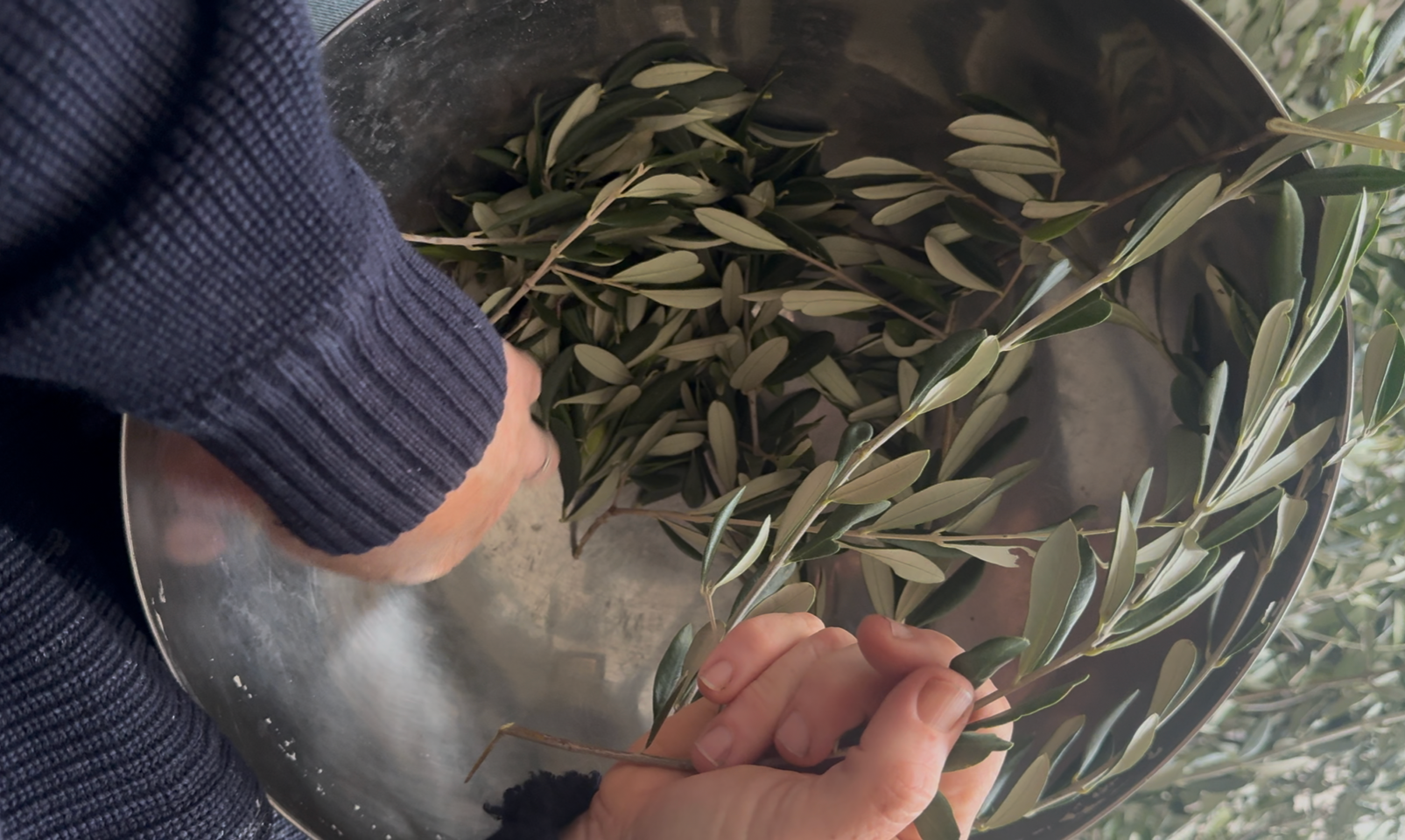
So you’ve got yourself a bowl of olive leaves and you want to dye something with them! Let’s go!!
You’ll need
an equal measure of olive leaves (by weight)
and pre-mordanted* natural fibre (i.e. 500 g leaves + 500 g fibres)
a large pot full of water
a source of heat
* See How to Pre-Mordant Your Fibre for more information
How much to use
How to extract the dye
How to dye the fibres
How to modify the colours
how to rinse and dry
Tips for achieving the perfect shade
Will tap water or ph affect the colour