
Tuscan Winter Dye Journey
A Call to Reciprocity
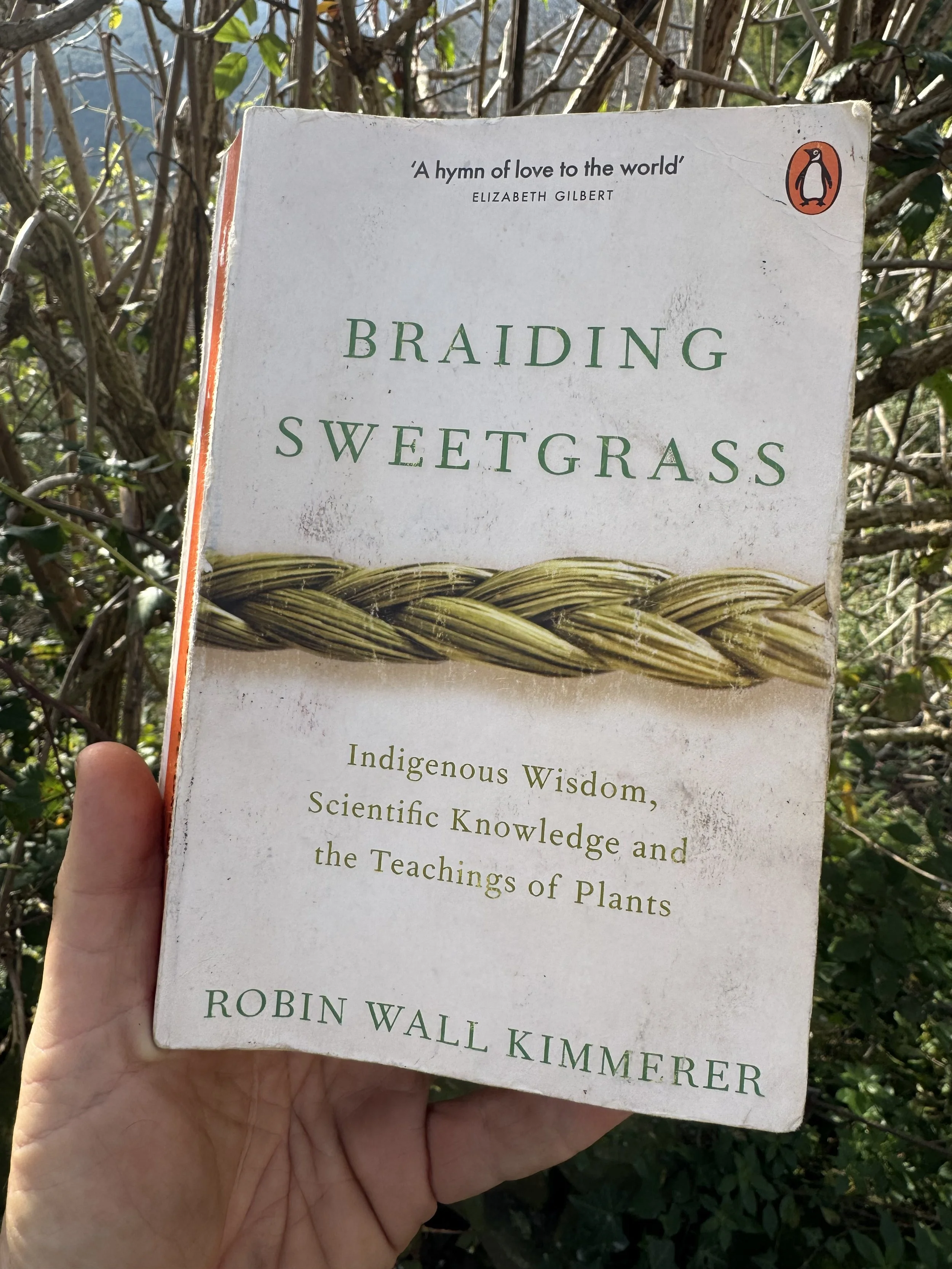
I’ve been reading Robin Wall Kimmerer’s book “Braiding Sweetgrass”. It’s a delicious and painful look at our relationship with land. Robin clearly loves the land and has a strong relationship with it that is grounded both in indigenous (Anishinaabe; Potawatami) and scientific (botany and plant ecology) knowledge. Most of the rest of us view land as a resource, a possession, an inert object, and as such we do not care for it as we would if we loved the land as a being it its own right.
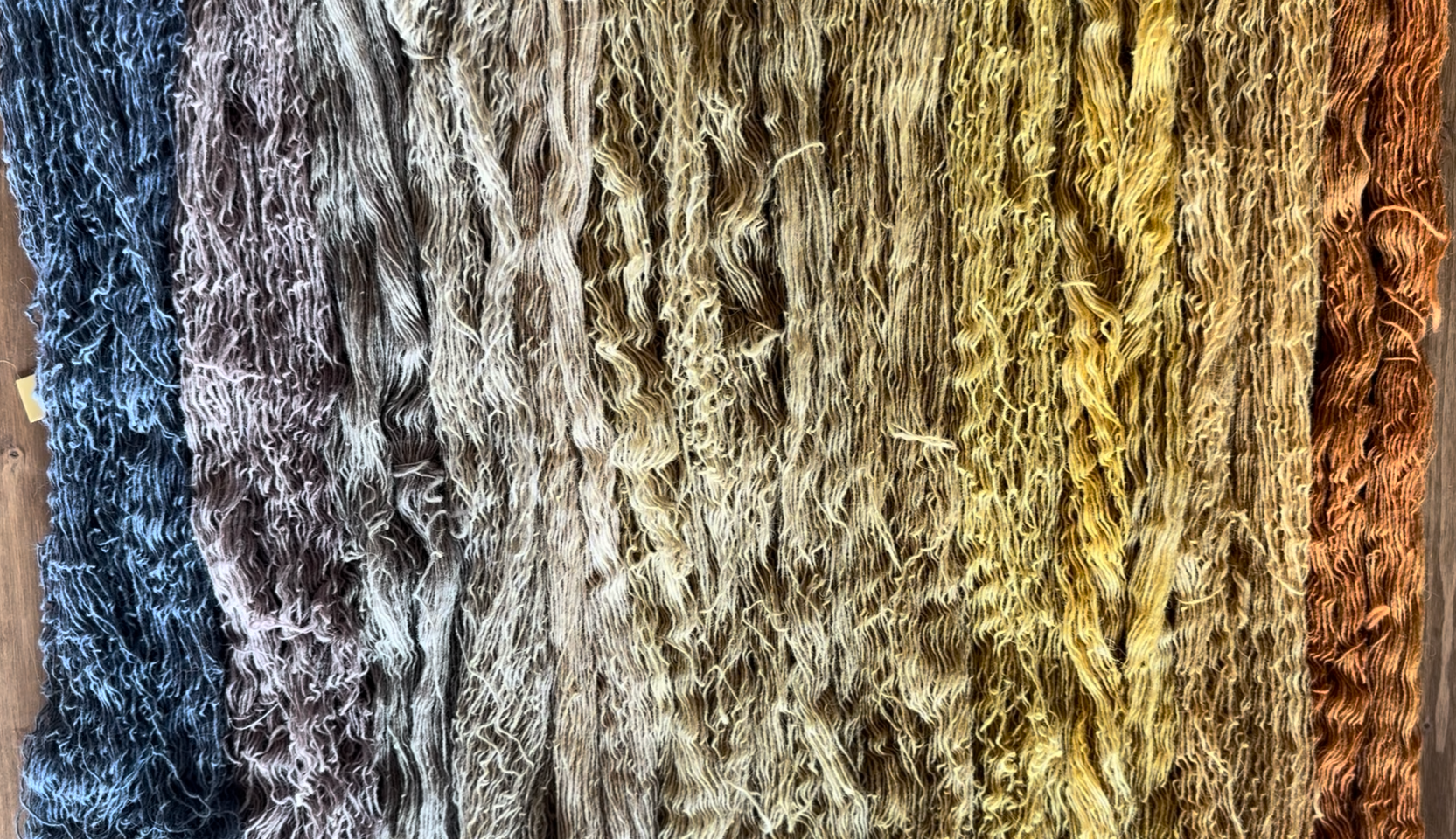
In reading her book, I heard a clarion call to have a more reciprocal relationship with the land. I do not have a full fledged idea about how to put this into practice, but Robin suggests we start wherever we are. I am here, in Tuscany. And I am a natural dyer and ecoprinter. So I am starting here, with a dyeing journey exploring what plants produce colour in my winter back yard.
Starting Philosophy
There are five ways that I thought I could implement a more reciprocal relationship with the land. I could:
Go local
Learn what is here
Harvest ethically
Give back
Spread the idea
One: Go Local
To honour what I was reading and the call to change, the very first step was to move from buying dye stuffs from faraway lands where I can have no relationship or even knowledge to going local. The advantage of this approach is that it is:
Anti-capitalist (free resources, anti-fast fashion)
Ecologically friendly (no transportation, packaging, reusing and recycling clothing, moving away from plastics)
Women-centred (traditional role of women)
Two: Learn what is here
What a great opportunity to learn about the land
build awareness of seasons, plants available
build knowledge of the plants themselves
build relationships with neighbours, local experts
Three: Harvest Ethically
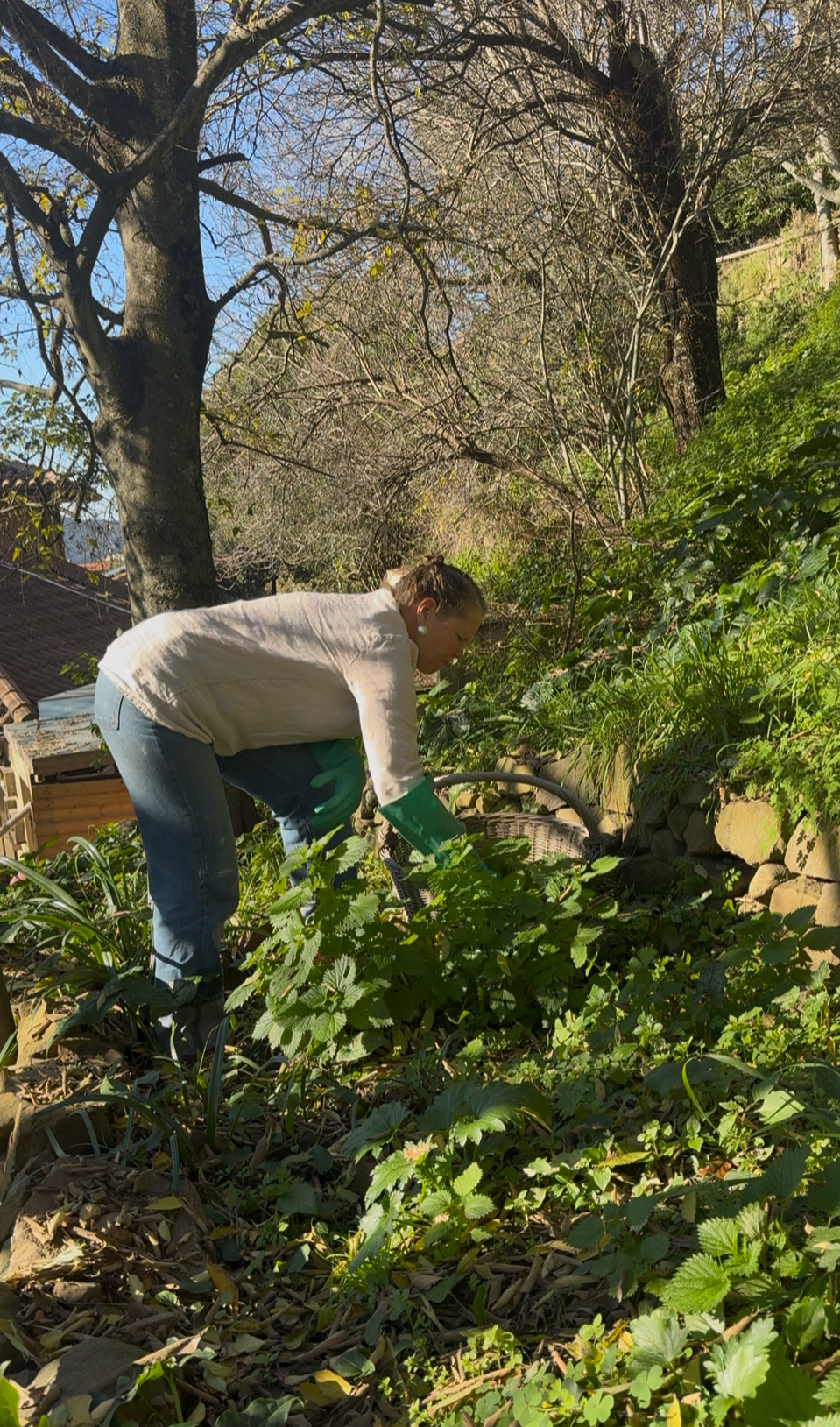
I have control over what plants to choose, when, and how the harvesting is done.
Ask for permission - be aware; what is happening here?
choose invasive plants, ‘weeds’, cuttings, etc.
how - not the first, not the last, not more than half, with care
Four: Give back
This was the largest leap for me, the area that I was most conscious of being new for me. While in the outback, I have always practiced the camping motto, “leave it better than you found it.” But in my backyard, I think of myself more as the owner, the master of destiny, shaping the land, doing battle with the plants to bring them into some sort of order, to create a ‘garden’.
Leave it better than you found it
Express gratitude
Five: Spread the idea
I am a teacher by passion, so this one comes easily. I am making the effort to share this dye journey in the hopes that
Newbies
Start out on the right foot
Begin right here, right now, with what you have
Dyers
Be empowered to break free from the fashion industry
Go local, be bold and playful
Discover the same joy in drawing colour from what is available to us as I had
All of us
Be inspired to find your own reciprocal relationship with the land
What Did I Gather?
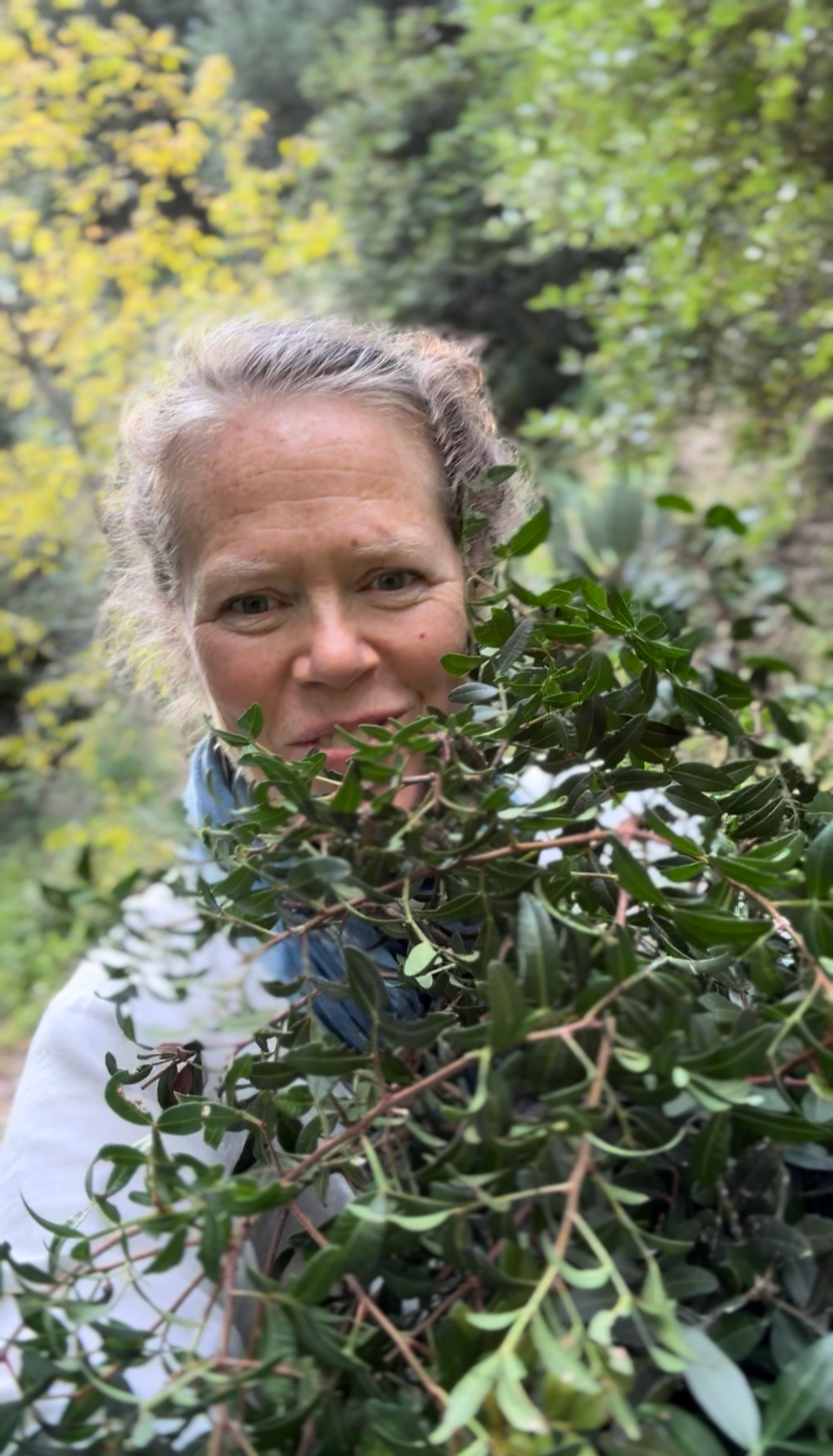
It was December. Here the last of the leaves are falling from the deciduous trees, but the many evergreens of the mediterranean are coming into their own. So I gathered the following:
Evergreens: Olive (olivo; Olea europaea), Mastic tree (lentisco; Pistacia lentiscus)
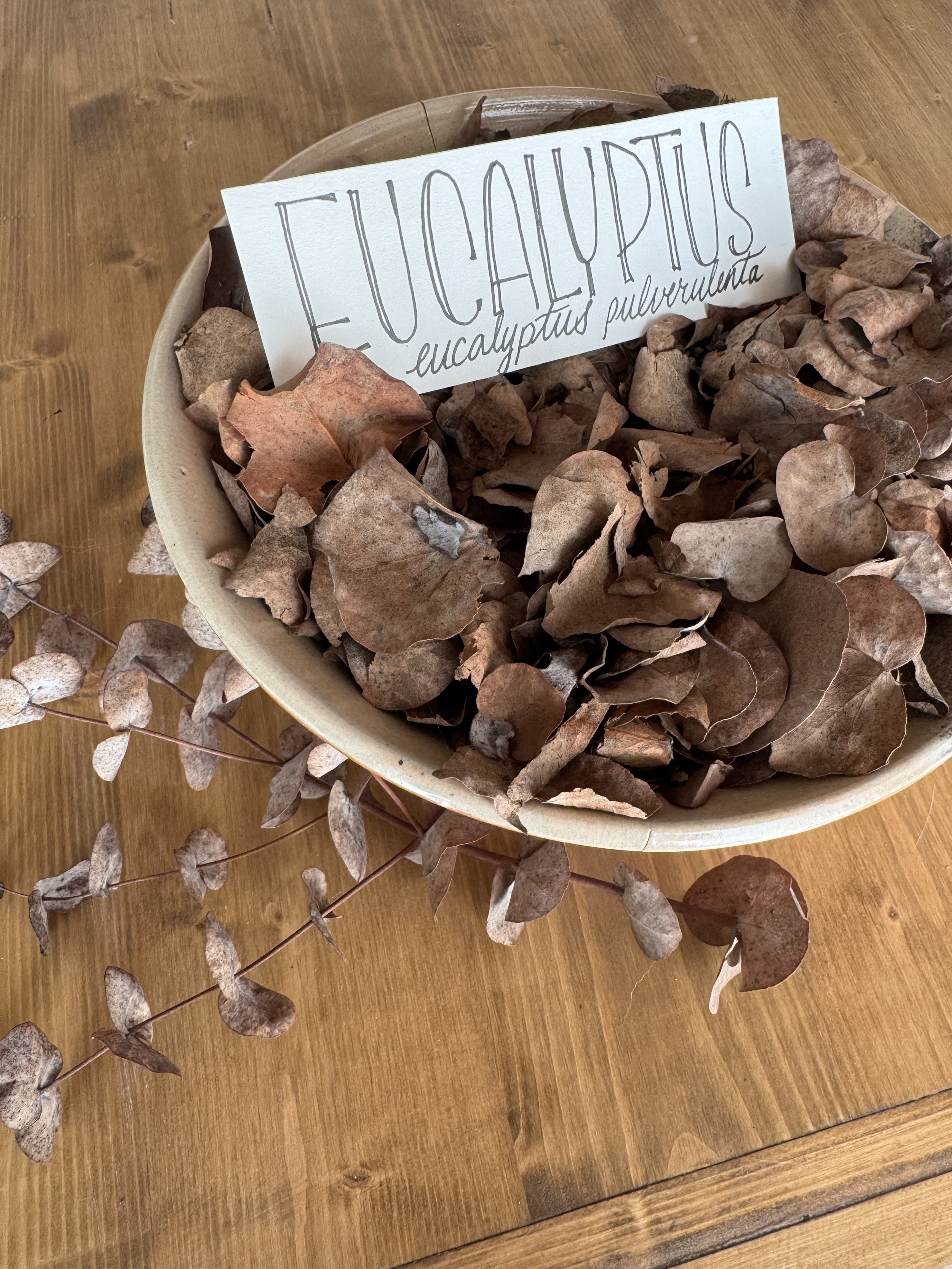
Eucalyptus: Eucalyptus (eucalipto; E. camaldulentis, E. Eucalyptus cinerea, E polyanthemos)
Plants: Rosemary (rosmarino prostrato, Rosmarinus officinalis prostratus), Nettle (ortica; Urtica dioica), Bramble (rovi; Rubus ulmifolius)
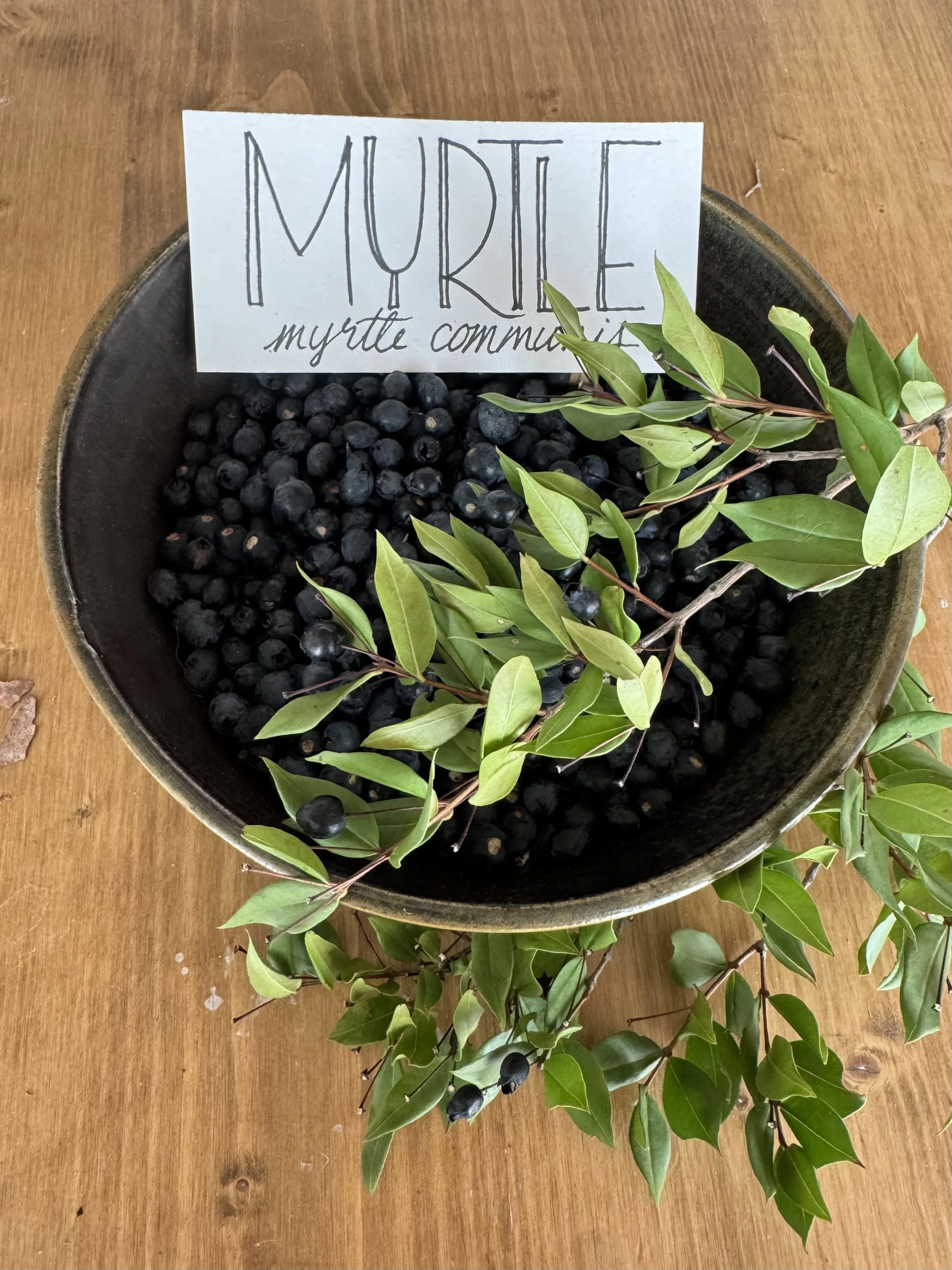
Berries: Ivy (edera, Hedera hibernica), Myrtle (mirto; Myrtus communis), Viburnum (laurotino, Viburnum tinus)
Nuts : Acorn (leccio; Quercus ilex)
Naming Format: English (italian; Latin)
Note: This is my first foray into dyeing with Tuscan dye plants. So I didn’t know what would work or not. And some of these were disastrous!
Basic Dyeing Process
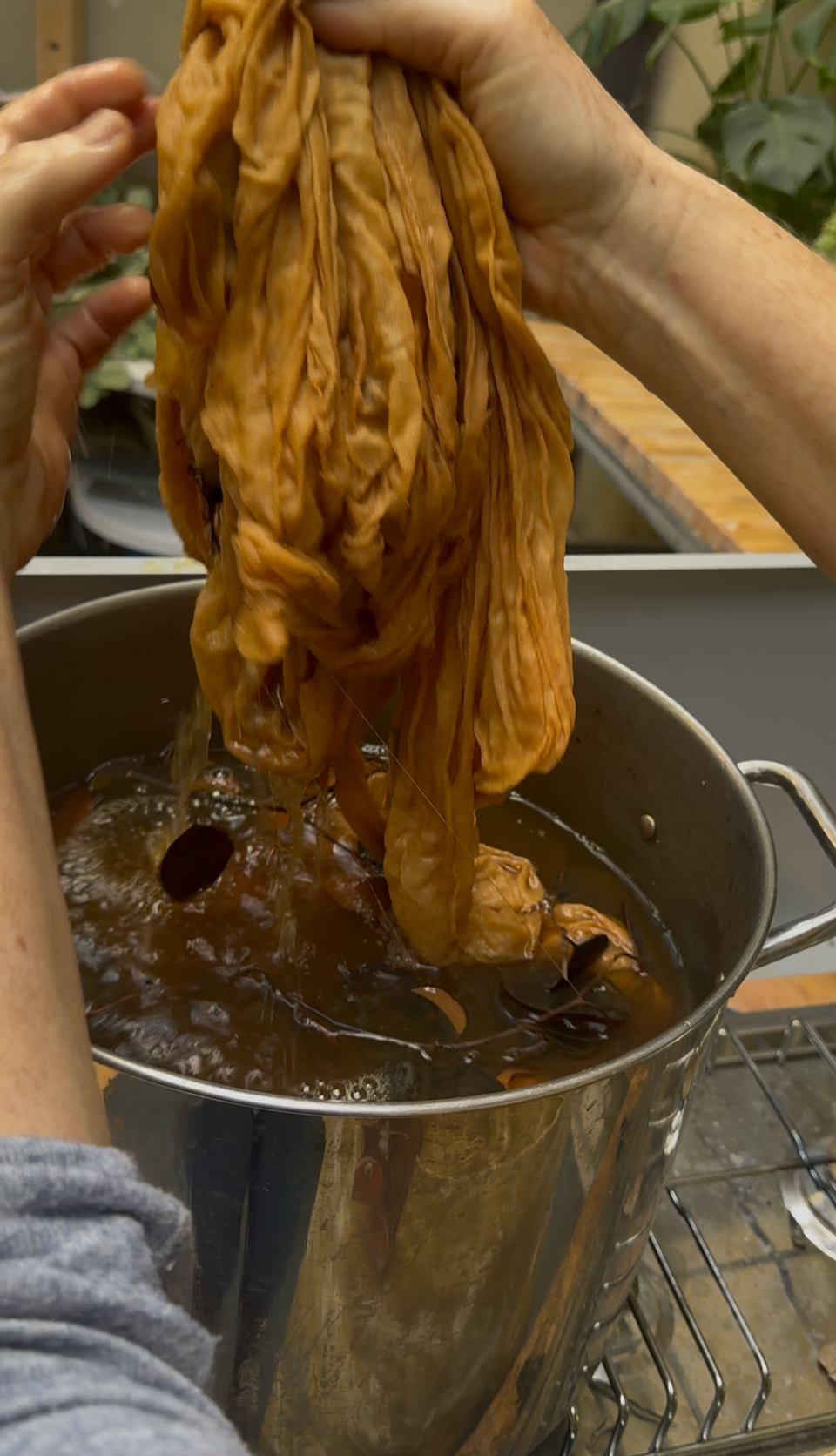
With each dye plant, I followed a basic process that I learned from the book that I brought with me from Canada called, “Craft of the Dyer: Colour from Plants and Lichens” by Karen Leigh Casselman.
Fill a large 24 litre stainless steel pot full of cool water
Place the dye stuff in the pot of water
Bring the pot of water with the dye stuff to a simmer
Hold at a simmer for 1-2 hours
Let cool overnight - it’s now called dye liquor
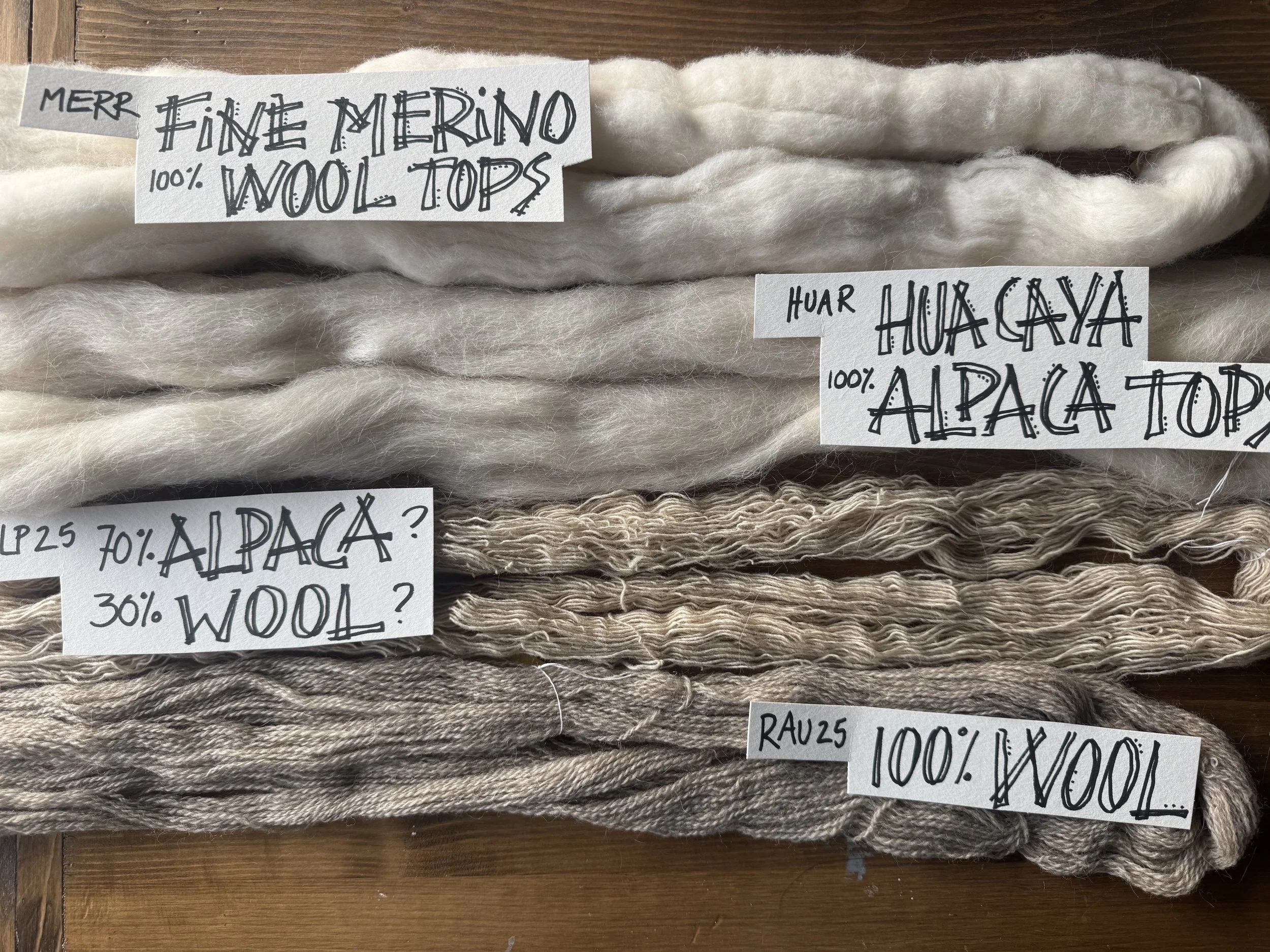
Place pre-mordanted fibre in the pot of cool dye liquor
Bring the pot of dye liquor and fibre to a simmer
Hold at a simmer for 1-2 hours
Let cool overnight
Check colour saturation - if not strong, leave for another night or two
When pleased with colour (or out of patience), squeeze out fibre
Hang to dry
I will be slowly creating individual pages for each of the dye stuffs, complete with lots of information about the plant and the process. Be patient. This is a labour of love.